Let's start with the conclusion: the best porcelain tile supplier is the one who protects your schedule when something goes wrong. If you are searching for a regional distributor in Gulfport, whether you type 'ACME Brick Gulfport' or just 'brick veneer distributor,' you are really asking the same question. Who can deliver the right material before the project stops?
In my role coordinating emergency orders for a building materials distributor, I've handled more than 200 rush orders in 12 years. That includes same-day turnarounds for contractors whose porcelain tile supplier missed a delivery window and Saturday deliveries for clients facing a Monday inspection. The bad calls are rarely a mystery. The warning signs were in the quote. You just have to know what to ask.
What to look for in a porcelain tile supplier
When I am triaging a supplier, I use four checks. These matter more than brand name or the first sample in the showroom.
- Branch-level inventory. Ask how many boxes of the exact size, color, and finish are in the warehouse that will actually ship the order. A central system can say 'available' while the closest physical stock is 800 miles away.
- Lot continuity. Ask for the production lot number on the cartons and reserve enough of that lot for the whole job. Tile made in different runs can look slightly different, especially in large-format porcelain. That is not a defect claim. It is shade reality.
- Freight and damage ownership. Ask who handles the claim if a pallet arrives broken. The best suppliers reissue material and sort out the carrier later. The weakest tell you to submit photos and wait.
- Current test data. For commercial work, ask for the ANSI A137.1 report or manufacturer's data for water absorption, breaking strength, and slip resistance. A distributor with real supply lines sends it the same day. A broker says they will ask.
One thing I've learned: the goal is not finding the cheapest porcelain tile. It is avoiding the moment when that tile is cheap enough to buy twice. (Which, honestly, usually means paying once and still waiting for the right product.)
Reading the quote like a schedule risk
Another thing I look for is how the supplier writes the quote. If the price says FOB origin, freight is your problem until the material reaches the site. If it says delivered but the supplier cannot confirm the final leg of the shipment, ask again. You are not comparing prices. You are comparing risk.
I also watch for vague delivery language on deadline-driven projects. For a commercial job, I need a committed arrival date, not a month-long window. The best suppliers give you a date and then call you when it changes. The weaker ones leave you refreshing your own tracking page.
Mosaic tile wholesale: the lot number is the truth
Mosaic tile is a different challenge because the pattern is built from hundreds of small pieces. If the sheets come from different production runs, the mismatch can be visible across an entire wall. You are not just checking tile color. You are checking the relationship between colors.
Honestly, I'm not sure why mosaic tile wholesale gets treated as a decorative item with softer inventory controls. My best guess is that mosaic looks custom, so buyers forget that it is manufactured in enormous runs. That is exactly why I ask a supplier to open a carton and lay out three adjacent sheets before I commit. A sample was selected. A box is reality.
If you are buying mosaic tile wholesale in quantity, ask whether the entire order comes from the same lot. If it does not, ask where the lot break falls and plan the layout around it. That is much easier than patching it after installation.
What a brick veneer distributor should do before delivery
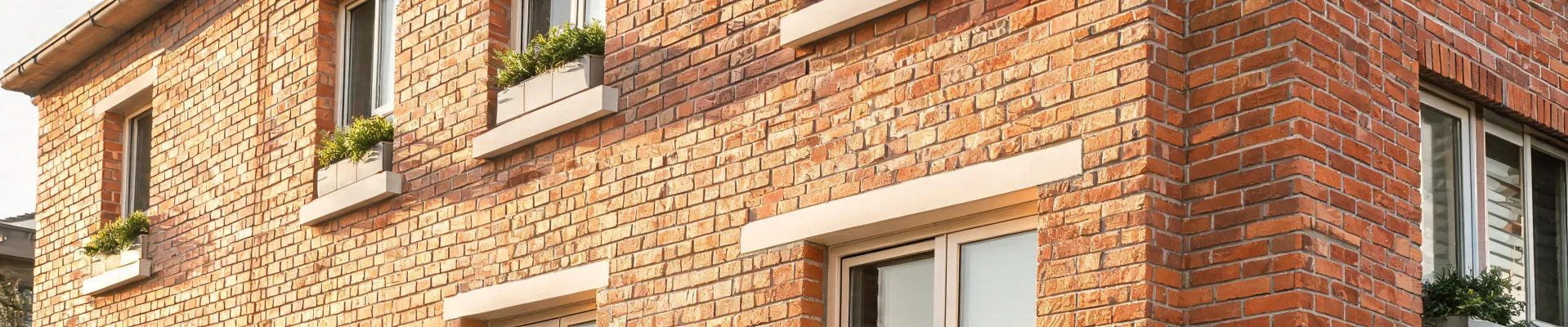
A brick veneer distributor is judged by accessories more often than by the brick itself. Thin brick is an installation system: outside corners, inside corners, transition strips, adhesives, maybe fabricated panels. The main brick can be perfect, but if the corners are on a separate truck, you cannot finish the first elevation.
I still kick myself for accepting a thin-brick order without checking the accessory release. The brick pallets arrived Tuesday. The outside corners arrived the following Monday. It wasn't a spec failure, and it didn't change the final building. It just cost the crew a day and cost me the contractor's confidence. Since then, I ask every brick veneer distributor to quote the full system, not just the brick face.
If you hear 'we can send the brick now and source the accessories later' (which, honestly, is one of the most predictable delivery delays in this industry), treat that as a scheduling risk.
One situation where my gut beat the spreadsheet
A few years ago, the numbers told me to use a new wholesale source for a porcelain tile order. It was about 16 percent cheaper than an established distributor, and the spec looked right. My gut said the lead time was too optimistic. I overrode it. The container cleared customs late, missed the consolidation truck, and sat in a transload yard for two days. We paid roughly $900 in emergency freight to recover the schedule. The price advantage disappeared, and the client still remembers the anxiety.
That is why I do not evaluate porcelain tile suppliers on unit price alone. Lead time, physical inventory, and accountability are all part of the price. The cheapest quote is only cheap if every promise after it is true.
Quality is a brand decision
Quality in building materials is not a badge on the box. It is the finished wall, floor, or facade the client walks past every day. The owner rarely knows how many hours you spent chasing a tile supplier or whether you saved twelve cents per square foot. They know whether the finished surface looks deliberate. That memory becomes your brand.
That is why I would rather work with a supplier who has plain packaging and a reliable delivery record than one with glossy samples and unclear inventory. The first supplier helps your reputation. The second one makes you defend it.
When the full checklist is overkill
If you are buying porcelain tile for a small residential backsplash or a 500-square-foot remodel, you do not need this level of process. A phone call, a lot label you can photograph, and a confirmed delivery date are enough. The cost of a small delay is smaller, so the supplier evaluation should be lighter.
This advice is also different for private-label or made-to-order programs. When the product is manufactured for your own brand, documentation and production scheduling replace branch inventory. But for the contractor or architect choosing a distributor, ask the four questions above and you will usually skip the emergency call.