Why I Built This Comparison
Four years of reviewing deliveries teaches you something fast: the gap between a brand-name product and a generic equivalent isn't always where you think it is. Sometimes the brand wins on spec. Sometimes it wins on consistency. And sometimes—the part nobody likes admitting—the generic is genuinely fine and you're just paying for the label.
I handle quality and brand compliance for a commercial building supply operation. Roughly 200+ unique items cross my desk annually. In our Q1 2024 audit, we rejected 18% of first deliveries. Not because of defects—most of them arrived in one piece—but because of measurable spec failures. Siding panels .002" under tolerance. Dispenser locks that wouldn't stay engaged. Cabinet cores that swelled after a 24-hour humid exposure test. The pattern was obvious: every rejection traced back to someone assuming the generic was close enough.
So here's what I'm doing: five product categories, each one a head-to-head between the Georgia-Pacific option and a generic or alternative equivalent. Five verdicts. One of those verdicts will probably contradict what you expected.
1. Vinyl Siding: Georgia Pacific Wedgewood vs. Generic Vinyl
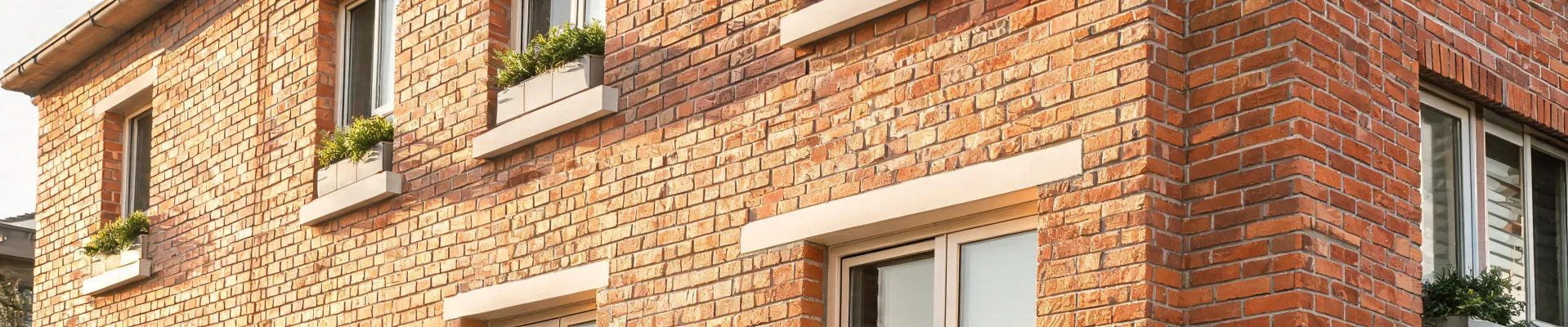
Contractors ask about the Georgia Pacific Wedgewood vinyl siding line by name, and I get why. Color-through profile (the substrate matches the surface color), a loyal installer base, and actual wind-load test data behind it.
Most buyers focus on color and grain pattern. The question they should ask: what's the panel thickness, and does the warranty cover color fade at that thickness?
Generic vinyl from overseas mills often comes in at .040" or .042" nominal. Wedgewood spec sheets typically land at .044" or .046". That difference sounds trivial—until you're looking at a wind-load rating per ASTM D5206, which doesn't reach the same performance threshold at lower gauges. And yes, per FTC Green Guides, any "recyclable" claim on that siding needs to be substantiated for the region where the customer is installing it—a detail most generic options skip entirely.
One frustration I've had: the same spec failures recur despite clear communication. You'd think a written spec sheet would prevent misinterpretation, but tolerances get read differently across vendors. Now every siding contract I touch includes a thickness requirement with a production-lot sample condition.
Verdict: If the project has a spec, a wind-load requirement, or a long-term appearance clause, go with the Wedgewood spec. For a temporary structure or a shed on your own property, generic siding won't hurt anything except resale.
2. Commercial Tissue Dispensers: Georgia-Pacific vs. Generic
Here's an area where the value comparison is lopsided—in the brand's favor—but not for the reason you'd expect.
The pitch for a Georgia-Pacific toilet paper dispenser isn't the plastic housing (though the standard ABS shell does hold up). It's the refill compatibility and jam rate. GP dispensers are engineered around their own roll geometry—core size, wind tension, sheet count. Generic dispensers accept a wider range of rolls but tend to jam more when the roll is near the end. And jams in a commercial restroom mean maintenance calls, which means labor costs that dwarf whatever you saved on the dispenser.
The flip side: GP's proprietary roll spec works the same way a printer works—once you commit to the dispenser, you're buying GP refills. That's a supply-chain consideration, not just a quality one. If your project requires ADA-compliant restrooms, remember the reach ranges—dispensers, towel bars, and flush controls need to fall within ADA's 15"–48" mounting envelope for unobstructed reach. A dispenser that sits outside that range fails inspection no matter how good the quality is.
Look, I'm not going to pretend every commercial facility manager needs premium dispensers. A 12-person office doesn't. But a facility with 400 daily users? The break-even point on jams is about six weeks.
Verdict: High-traffic restrooms—spec GP. Low-traffic or short-lease spaces—generic is defensible. The middle ground depends on your maintenance headcount.
3. Glass Cleaner: Formulation Differences That Actually Matter
Most buyers focus on per-bottle pricing and completely miss the residue profile, surfactant content, and frame-friendly formulation. That's where the comparison gets interesting.
Here's something vendors won't tell you: a lot of generic glass cleaners use ammonia as the primary solvent because it's cheap and it evaporates fast. The problem is ammonia attacks the sealants around insulated glass units and stresses the anodized finish on aluminum window frames over time. A glass cleaner that cleans well on day one but leaves a chronic residue in your window tracks is not actually saving you money.
GP's commercial glass cleaner line (sold through their facility maintenance portfolio) uses a non-ammonia formulation with a different surfactant package. Cleaner on the glass, but it also behaves better on tinted films, polycarbonate, and acrylic sneeze guards—the surfaces you find in every commercial kitchen and office partition system.
The most frustrating part of window cleaning products: you can't tell the difference from a label. The only way I've found to verify is a residue test on a clean pane with a white buffing cloth. If the cloth shows a faint film after drying, the formulation is leaving something behind.
Verdict: For regular use around windows, films, and partitions, the non-ammonia formulation wins. For spot-cleaning a mirror at home, generic is a no-brainer.
4. White Kitchen Cabinets: Cabinet Cores and Particle Board
This is the category where the comparison surprised me.
When spec'ing white kitchen cabinets, most buyers focus on door style and paint finish. They completely miss the cabinet box material—and that's where the failure risk actually sits. Particle board from a reputable mill, like GP's particle board, is denser, more dimensionally stable, and bonds adhesives more consistently than generic imports. The difference shows up in two places: screw-holding strength at the hinges, and moisture behavior at the toe kick where mops and spills live.
I ran a back-to-back comparison for a restaurant client's kitchen build in early 2023: same cabinet layout, GP particle board cores vs. generic import cores. After 11 months in service, the GP box showed a 9% swell at the toe kick; the import box was at 23% and the door alignment had drifted by the time of my follow-up visit. That's not a cosmetic problem—it's a warranty conversation.
There's also the adhesive question. GP cores carry CARB Phase 2 compliance documentation (that's the air-quality standard for formaldehyde emissions, and it's not optional in California and a few other states). A generic import without that paperwork is a red flag on commercial projects—not because it's definitely non-compliant, but because you can't prove it's compliant when an inspector asks.
Verdict: Specify GP-core boxes for kitchens you intend to see last 10 years. Generic cores are fine for flip projects or rental units where the replacement window is under 5 years.
5. Hardware and Fit: What Can-Am Defender Doors Teach Us
Here's a category that seems out of place. Stay with me.
The Can-Am Defender is a workhorse—customers spec them for job sites because the bed takes abuse and the AWD gets them to the site before the subs show up. But the doors? They're the part that tells you the most about sealing and fit. Factory Defender doors close on the latch with one motion, hold their gasket contact through vibration, and don't whistle at highway speed. That's not marketing—that's tolerance control.
Aftermarket Can-Am Defender doors I've seen on customer units often need shimming, re-gasketing, and a second set of hands just to line up the hinge. And that's before the dust issue—I've watched a $15,000 Defender get its cab filled with construction dust every August because an aftermarket door wouldn't seal to the frame.
What does this have to do with building materials? Everything. Same tolerance logic. If the hinge, latch, or lock is off by 1/16", the rest of the system suffers. GP's vinyl siding accessories, dispenser brackets, and cabinet hardware are machined to tighter tolerances than the visual-only generic parts, which is why they cost more—and why they don't rattle, leak, or fail under load.
The rule I've landed on: if the part carries weight, moves, or seals, don't go generic. If it's decorative and static, generic is fine. That applies across the entire build, from siding trim to the truck that hauls the crew.
Verdict: OEM or spec-grade for anything load-bearing or sealing. Generic for trim, spacers, and decorative hardware.
Bottom Line by Scenario
Here's how I'd actually spec these decisions if each one landed on my desk tomorrow.
If you're building for resale within 5 years—generic on siding thickness (assuming the spec allows), generic on dispenser (low traffic), generic on cabinet cores, generic on hardware. You'll save 15-25% and the failure timeline is longer than your holding period.
If you're building for long-term ownership, commercial operation, or a client with a warranty—spec GP on all five. The failure cost, in labor and redo, exceeds the material premium every time. The only one I'd still debate is the glass cleaner—buy the non-ammonia formulation regardless of brand, and check the residue before committing to a case pricing contract.
There's something satisfying about a perfectly spec'd order. After four years of rejections and site visits, finally getting a project where every component arrives within tolerance—that's the payoff. Not because it's a brand. Because it's the right spec for the job.