In my first year handling material orders, I assumed the supplier with the lowest unit price was always the right answer. Three budget overruns later, I stopped chasing cheap quotes and started looking at total project cost. That shift led me to compare two ways of buying materials: placing a whole mixed building package with one multi-category distributor, or splitting it among specialists. I have done both. I have made mistakes with both. Here is how I think about the choice now.
I have spent six years handling procurement for commercial and multi-family projects, and I have documented four significant mistakes that cost roughly $31,000 in rework and delays. Now I maintain our team's pre-order checklist. This article uses that checklist, plus the mistakes behind it, to compare two sourcing models.
This is not a brand loyalty argument. I am not going to tell you that every project should be sourced the same way. The comparison is between one multi-category supplier and several specialists. The criteria are the ones that have cost me money: specification consistency, accountability, lead times, technical support, and flexibility.
Acme Brick and the Search for Specifics
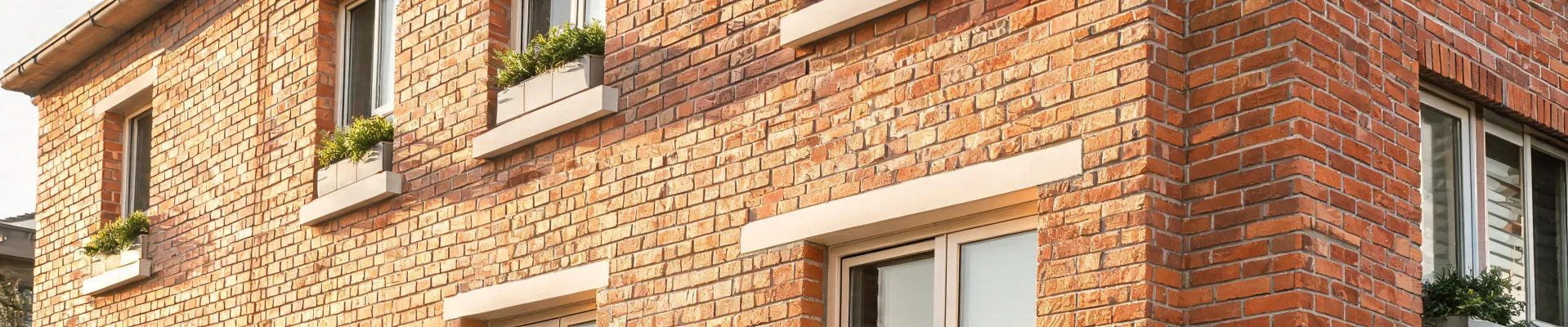
If the phrase 'Concordia brick Acme' is in your search history, you already know that brick selection is about specifics. A color name alone is not enough. You need the product line, the plant location, and, if you are matching existing masonry, the production date. I can tell you from experience that 'the same brick' can look different from one kiln run to the next. I made that mistake in 2019 on a multi-family project. We ordered brick by a name that was close to what the architect specified but not close enough. The color variation showed up after the masons had laid the first few panels.
In a one-distributor setup, brick and block usually come from one inventory pool, which helps avoid mixing production dates. A brick specialist will often know more about kiln runs and blending. You cannot assume either one will handle it. You have to ask. Put the exact product designation on the purchase order and ask the supplier to confirm that all units come from the same production run.
Dimension 1: Ceramic Tile Specifications
Ceramic tile specifications are not just for architects. I learned that the hard way on an order where I confirmed the tile size and color but not the PEI rating. The tile went into a commercial corridor and scratched within weeks. The replacement cost was around $2,800, and that number did not include the conversation with the general contractor. Actually, it was closer to $3,400 with rip-out and labor.
Here is what I ask for now on any ceramic or porcelain tile order:
- ANSI A137.1 designation
- PEI abrasion class
- Water absorption (porcelain is generally under 0.5 percent)
- DCOF rating, especially for floors
- Rectified or non-rectified edges
- Shade and caliber numbers
If a supplier cannot produce those numbers, I treat that as a warning. A porcelain tile distributor should be able to explain them, not just forward a data sheet. If a supplier labels the tile as recycled or eco-friendly, ask for substantiation. Per FTC Green Guides (ftc.gov), environmental claims need to be backed up.
Dimension 2: What to Look For in a Construction Lumber Supplier
I am not a structural engineer, so I cannot speak to load calculations or span tables. What I can tell you from a procurement perspective is what to look for in a construction lumber supplier. You should be able to get the species, the grade, the moisture content target, and a treatment retention label if the lumber is pressure-treated. If the package includes engineered wood or LVL, ask for the manufacturer's product data and span information.
You should also be able to inspect the lumber before the driver leaves. I once caught a load of wet framing lumber by checking it with a moisture meter at the tailgate. It looked fine. The moisture content was too high for interior framing. That would have caused shrinkage problems later. The supplier offered to take it back, but the schedule was already damaged.
A dedicated lumber supplier usually wins on storage and handling. They have covered yards and better delivery equipment. A general distributor can still do the job, but lumber is often a smaller part of their business. If the project is lumber-heavy, I treat a specialty lumber supplier as a separate decision, not an automatic add-on to the brick order.
Dimension 3: Accountability When Something Goes Wrong
The biggest difference between the two models is who answers when a problem shows up. In the specialist model, a brick problem belongs to the brick supplier. A tile problem belongs to the tile supplier. That sounds clean. In practice, it means a lot of phone tag when a delivery arrives with the wrong materials.
Everyone told me to keep written records of material specifications. I did not do it carefully for the first two years. Then, in September 2022, I approved a tile order based on a verbal description. The delivery looked right from the box. It was not the same shade as the approved sample. We installed about three hundred square feet before someone noticed. That mistake cost $1,100 in material and a full day of labor.
In a one-distributor setup, there is one purchase order and one account manager. You can escalate to the same person who quoted the job. In a multiple-specialist setup, the suppliers can point at each other. The lumber supplier says the framing package was delivered on time. The contractor says it was not. The tile distributor says the specification was never sent. Fixing that takes time, and time is money.
To be fair, specialists are usually more accountable on technical questions. A lumber specialist will answer sizing and grade questions faster than a general distributor. The same is true for a porcelain tile distributor that works with large-format tile every day. That depth is real.
Dimension 4: Lead Times and Logistics
On a Q3 2023 project, we had brick, tile, mortar, and lumber all on the critical path. We ordered from four separate suppliers because each had the best price on their line. The brick arrived in week five. The tile arrived in week three and had to be warehoused. The lumber arrived in three different deliveries, each with its own paperwork. I spent more time coordinating deliveries than I spent comparing prices.
The multi-category distributor fixed much of that. One delivery window, one freight bill, one point of contact. But here is what surprised me: on lumber, the dedicated supplier was more consistent. The distributor treated lumber as a minor part of the package, and their lumber delivery ran late more often. I do not have hard data on nationwide on-time rates, but based on our orders from 2023 to 2024, the dedicated lumber yard was about two days more reliable on framing lumber.
OEM and Private Label Considerations
If you are a contractor buying one-off loads, technical support means getting a straight answer before you order. If you are an OEM or private-label buyer, it means more. It means packaging, labeling, blending, and production scheduling. A distributor that supports private label will usually have a process for it. They can blend mortar or adhesive under your brand, coordinate pallet counts, and keep your account separate from standard retail. Specialists can also do this, but you often need to buy at higher volumes to get their attention.
The Checklist I Use Now
After enough mistakes, I built a pre-order checklist. It does not replace the engineered drawings or the manufacturer's published data. It just makes sure I do not skip the questions that have burned me before.
- Product identity: brand, model or series, plant or production location, and production date if matching existing work.
- Brick standards: ASTM C216 for facing brick or C652 for hollow brick. If concrete masonry, C90.
- Ceramic tile specs: ANSI A137.1, PEI class, water absorption, DCOF, rectification, and shade or caliber numbers.
- Porcelain tile distributor questions: Do they stock or cross-ship? Can they send samples from the same lot? Can they provide a data sheet with COF numbers?
- Lumber supplier questions: species, grade stamp, moisture content, treatment retention, and site inspection with a moisture meter.
- Mortar and adhesive: type, bag weight, coverage rate, and batch numbers if matching matters.
- Logistics ownership: who coordinates the delivery window, who owns the unloading time, and what happens if the truck is late.
Which One Should You Choose?
Here is my practical answer. If your project has a balanced mix of brick, block, tile, mortar, and lumber, use a multi-category distributor as the primary vendor. You may pay slightly more on the lumber line than a specialist would charge, but you save time and reduce the chance of a coordination gap. If the project is dominated by one material, use a specialist for that material. A construction lumber supplier with a dedicated yard and dry storage is worth the extra coordination. The same goes for a porcelain tile distributor when slip resistance, large formats, or exact shade matching matter.
Part of me wants to consolidate everything with one account manager. Another part knows that multiple suppliers saved us during a supply chain squeeze in 2023, when one product line was backordered. The way I handle it now is a primary plus backup: one multi-category distributor for the bulk of the package, and a specialist for the product type that is most critical on that particular job.
I would rather spend ten minutes explaining these sourcing options than deal with mismatched expectations later. An informed customer asks better questions and makes faster decisions. That is the whole reason I keep a checklist from my mistakes and share it.