I’m the quality and brand compliance manager for Acme Brick’s multi-market distribution operation. I review roughly 3,000 incoming lots a year—brick, block, tile, precast, adhesives, and engineered wood. Around 3% of first deliveries got rejected in 2024. Maybe 3.1 if you count the tile returns. I’d have to check.
That background is relevant because when masonry brick sourcing goes wrong, I’m usually the last person to hear about it. The call comes after materials are on the ground and the approved mock-up doesn’t match the delivery.
The Call Started With a Mock-Up
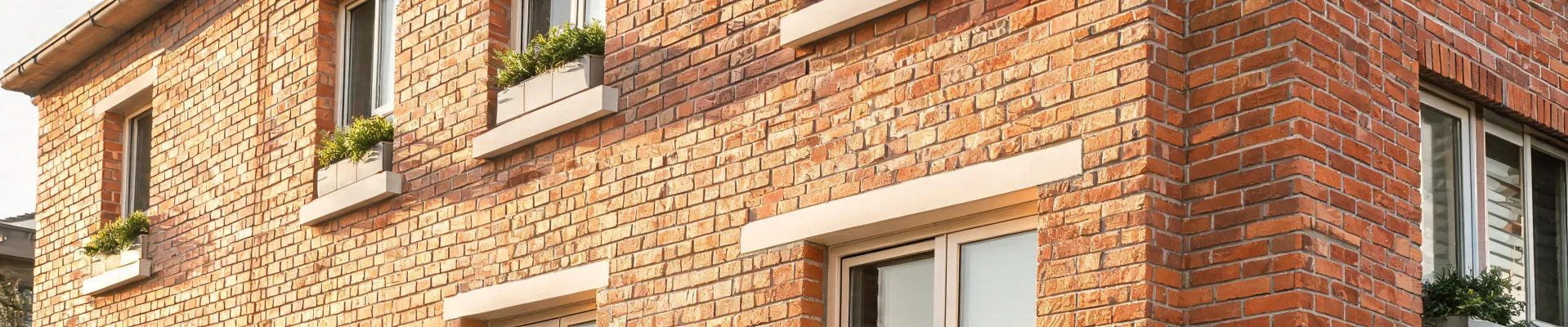
In March 2024, our Acme Brick Montgomery AL supply center forwarded a voicemail from a mason. He didn’t ask for a price. He asked if we could help source brick that matched an approved sample. The project was a multi-family exterior in Montgomery, AL, built with anchored brick veneer. The order was roughly 18,000 modular brick.
He had bought the brick from an online broker to save money on the front end. The approved sample came from one production lot. The delivery came from two, and one had a visibly darker shading. Not structurally wrong. Not wrong enough for a tape measure. Wrong the way paint looks right in the can and wrong on a wall.
His first question was whether he could blend the darker pallets in and make it look intentional. My answer: not on an 18,000-brick elevation. You can blend variable brick if the specification says you expect variable brick. But when the mock-up is from one lot, the rest of the project needs to follow that mock-up.
The masons didn’t notice until the sun hit the wall late in the afternoon. Once it did, the elevation looked patched. Not ideal. Expensive.
What the Spec Was Missing
The signed spec line said “brick veneer, ASTM C216.” That’s where it stopped. According to ASTM C216, facing brick is classified by weathering grade and type, and that still doesn’t make it a color-match certificate. C216 covers physical requirements and tolerances. The visual range, the starting point for shade, and the lot authorization come from the spec and the approved mock-up.
Masonry brick sourcing needs three things in writing before the first pallet ships: the grade, the type, and a lot-traceability clause. In that order. If you want a tighter appearance, choose the type that reflects that, and require all units on the exposed elevations come from a single lot or an approved blend.
That last part—approved blend—is important. Clay brick varies. It should vary. But “vary” is a decision the design team makes, not a default the supplier gets to make.
A low initial quote is not the same as the lowest total cost. On brick veneer, total cost has to include the cost of finding a match when something goes wrong.
The Rescue Worked. It Was Still Painful.
We were able to help because Acme Brick Montgomery AL had the receiving history and inventory data to locate matching stock in another part of our network. The matching brick arrived in about five days. The freight premium was somewhere around $4,800—maybe $5,200 if I’m mixing it up with a block order. The original “savings” had been about $4,000. It did not end well on paper.
I have mixed feelings about online material sourcing. On one hand, it gives a contractor in Alabama access to products from all over the country. On the other, it creates a false sense that a photo and a product name are enough to make an informed choice. The broker wasn’t the villain here. The vague spec was.
The old rule “buy from the closest yard because the closest yard knows what it sold you” came from an era with fewer SKUs and simpler supply chains. That era is gone. Today, a multi-region distribution company can often track a lot faster than a yard that buys from whoever has capacity. But no system replaces a written specification.
A Practical Mosaic Tile Specification Guide
If you think this story only applies to brick, it doesn’t. The same pattern shows up in tile nearly every quarter. “Mosaic tile” describes a format, not a performance rating. For ceramic and porcelain mosaic tile, the industry uses ANSI A137.1 to classify product, and TCNA installation guidelines for how it should go together. Use those references in your project manual.
Here’s the no-fluff version I keep in my audit packet, the same one I’d use on a mosaic tile specification guide for contractors, distributors, and OEM buyers:
- Standard and product type. Write “porcelain mosaic tile per ANSI A137.1,” “glazed mosaic tile,” or whatever the drawing actually needs. Saying “mosaic tile” alone leaves classification open.
- Water absorption and location. For wet or exterior conditions, specify the absorption class. Porcelain is generally the practical choice for wet areas, but the real point is to name the required class instead of letting the supplier pick a different one.
- Slip resistance. For floors, especially floors that will get wet, ask for documented slip-resistance data. Don’t make the installer guess from the sample’s gloss.
- Shade range and lot number. This is the brick lesson in smaller squares. Approve a sample, note the lot number, and require deliveries to be from that lot or an approved blend of lots.
- Mounting and trim. Mosaic tile comes mesh-mounted, paper-faced, or mounted on resin. Specify what the substrate and adhesive need, and list the edge conditions—bullnose, cove base, transition strips—before the order, not after.
Does every order need every line? No. But if a drawing says “mosaic tile here” and stops, you’ve asked for trouble in the same way “ASTM C216” without a grade, type, and sample lot asked for trouble on that brick veneer job.
The Takeaway
What was best practice in 2020 may not apply in 2025. But the fundamentals—clear standards, verified samples, traceable lots, and an approved color range—haven’t changed. The execution has more options now, not fewer.
Speed, quality, price. On masonry sourcing, you can still have all three if you’re willing to be specific about what you’re buying. The last 18,000-brick project taught me that. It was an expensive reminder, but a useful one.